From 24 to 26 August 2026, the Mainland–Hong Kong Symposium on the Frontier Integration of Climate Simulation and Artificial Intelligence was held at Lanzhou University. Part of the Ministry of Education's exchange programme for university teachers and students from the Mainland, Hong Kong and Macao, the symposium was hosted by the College of Earth and Environmental Sciences of Lanzhou University and co-organized by the Department of Civil and Environmental Engineering of HKUST, coinciding with the College's 80th anniversary. The the HKUST team took part in the three-day exchange with scholars and students from Tsinghua University, Southern University of Science and Technology, the Chinese Academy of Sciences and other institutions, followed by a field expedition to the Qilian Mountains.
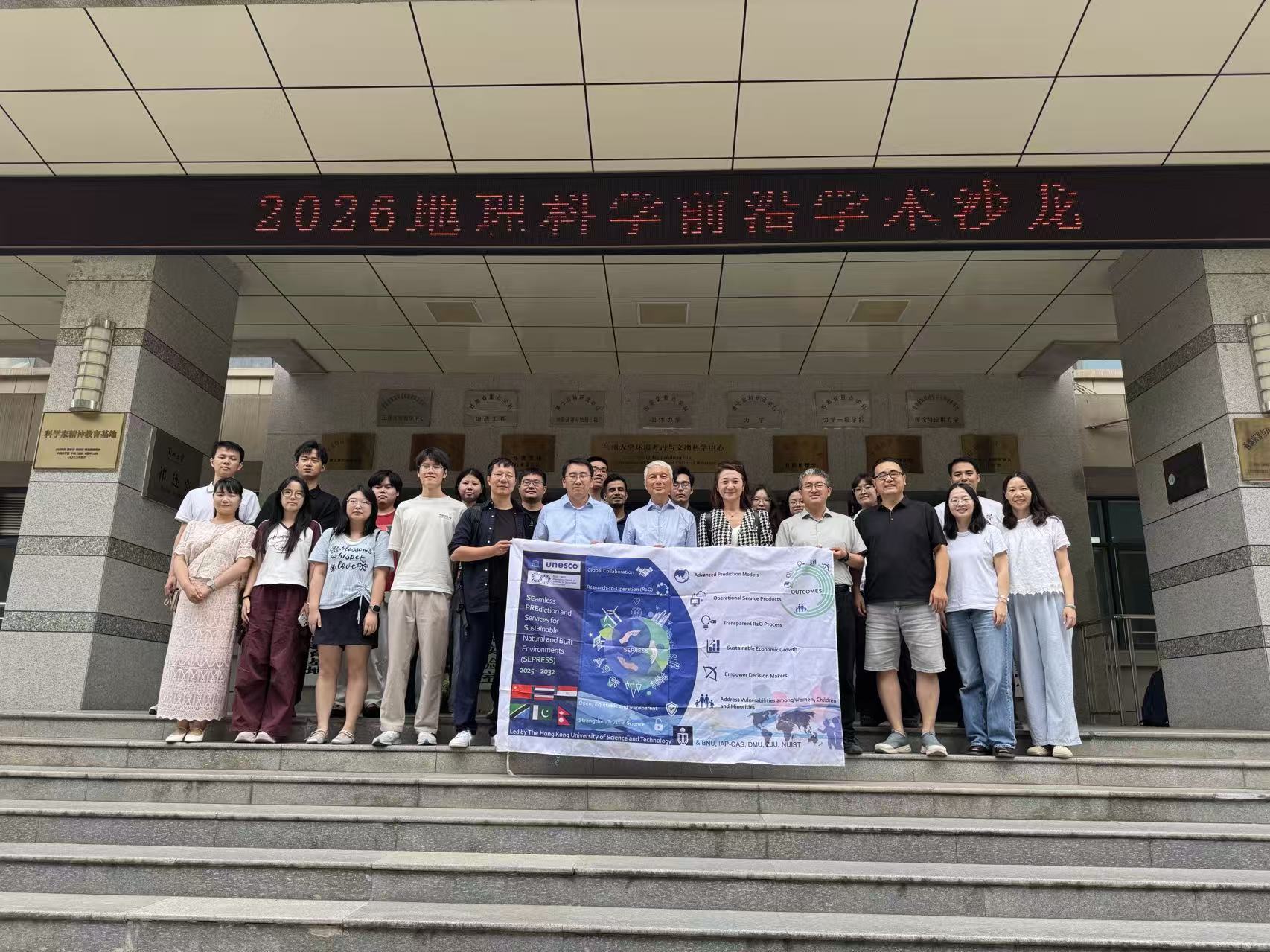
On the morning of 25 August, Prof. Mengqian Lu delivered a keynote entitled "Meteorological Intelligence: From Science, Engineering to Solutions", presenting the team's multi-hazard early-warning intelligent agents and the latest progress of the SEPRESS big-science programme — powered by AI and big data, connecting scientific understanding, engineering implementation and decision-oriented services so that weather intelligence can truly support disaster risk reduction and industry applications.
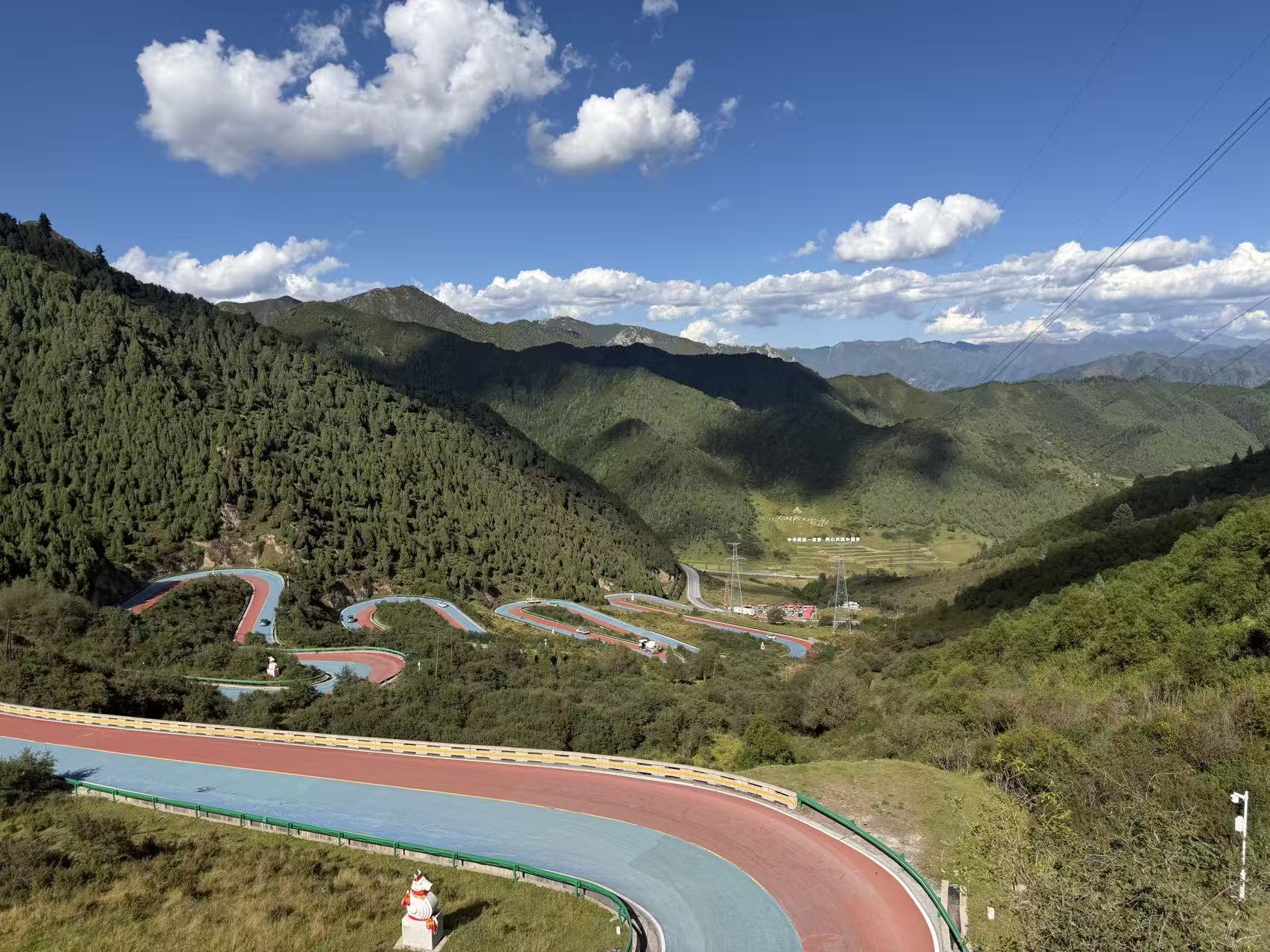
From 27 to 29 August, the team travelled to the Qilian Mountains for a field expedition, visiting the Liancheng Forest Ecosystem Observation and Research Station of Gansu Province and the eastern Qilian Mountains. At Liancheng, the team toured the climate-change manipulation experiments and the long-term observation system tracking tree growth and ecophysiological processes across water–heat gradients, and exchanged views with station researchers on cross-validating long-term climate records with modern controlled experiments. Along the eastern Qilian Mountains, the team examined alpine vertical vegetation zones and observed firsthand the upward shift of timberlines, shrub encroachment and changes in water-source conservation. The two sides exchanged views and reached initial consensus on the long-term development of the observation station, coordinated data collection and intelligent data management, a digital meteorological monitoring network, data-sharing mechanisms and joint talent cultivation.
In the afternoon youth forum, young members of the team shared the stage with students and early-career researchers from Lanzhou University, covering topics such as compound hot-humid heatwave and atmospheric-river events in eastern China, bias correction and intelligent-agent applications for sub-seasonal rainfall forecasts, and kilometre-scale wind-speed changes in the Guangdong–Hong Kong–Macao Greater Bay Area and their sectoral impacts. Discussions on bias correction, data assimilation and the interpretability of AI models ran deep and lively.
From lecture hall to snow mountains, the trip showcased the team's work in weather intelligence and gave us a firsthand appreciation of ecological responses under climate change. The HKUST team will continue to deepen collaboration with mainland institutions in data, observation and talent cultivation, working together toward smarter prediction of, and resilience against, extreme weather.